The Model Is Not the System
Build the Structure, Don't Wait for the Model
One camp waits for the next model to make agent problems disappear. The other engineers the structure around the model, including the instrument that feeds the system data about itself, so it can evolve on evidence instead of faith.
TL;DR
- Two postures dominate agent engineering: “the model will handle it” and “engineer the structure around the model”
- Waiting for the next model outsources your improvement loop to a vendor’s release calendar
- The structure posture is not distrust of models; it is building the machinery that turns whatever model you have into a system that improves
- The core of that machinery is an instrument: a tool that exercises your system and emits data about where it stands
- Data feeds an improvement session; a human-initiated report gates what merges; the merged change becomes the next baseline
- A better model makes this cycle stronger, not obsolete. The model is a component. The system is yours
The bet everyone is placing
Every model release re-runs the same argument. One camp says the new model is finally good enough to trust with the whole job: drop the scaffolding, hand it the task, let it judge its own work. The other camp keeps building structure around the model: gates, verification, instrumentation, memory.
These are not two moods. They are two engineering bets with opposite failure modes.
Bet on the model, and your system’s improvement loop belongs to someone else’s release calendar. When behavior regresses, and it does regress, in ways raw capability scores do not predict, you have no mechanism of your own to detect it, measure it, or compensate for it. Your roadmap is hope.
Bet on structure, and the model becomes a component: the most powerful component, swapped freely as better ones ship, inside machinery you control.
Structure is not distrust
The structure posture gets caricatured as pessimism about models. It is the opposite.
A strong model inside good structure outperforms the same model used bare, for the same reason a strong engine inside a good drivetrain outperforms an engine bolted to a bench. The structure exists to harvest the model’s capability, route it, verify it, and keep its output when it is right, which is often.
The question was never “is the model good?” It is: when the model is wrong, does your system know? And when your system is wrong, does it have a way to get better that does not begin with waiting?
The instrument: giving the system senses
The answer that emerged from my own practice is a cycle, and its heart is not the agent. It is an instrument.
An instrument is a tool built alongside the product whose only job is to exercise the system and emit data about where it stands: synthetic cases that probe the behaviors you care about, graded runs against expectations, per-stage results instead of one end-to-end verdict. It is the system’s senses. Without it, every claim about quality is a vibe.
With it, a cycle closes:
- Exercise. The instrument runs the system against its cases and produces evidence: what passed, what failed, where, and how consistently.
- Improve. That evidence feeds an improvement session, an agent working on the harness itself, guided by data instead of intuition about what might be wrong.
- Gate. A human initiates a report and reviews it before anything merges. The claim “this change made things better” is never accepted from inside the loop; the instrument’s numbers and a human’s judgment close the gate together.
- Baseline. The merged change becomes the new baseline the instrument measures against. The cycle repeats, each turn standing on the last.
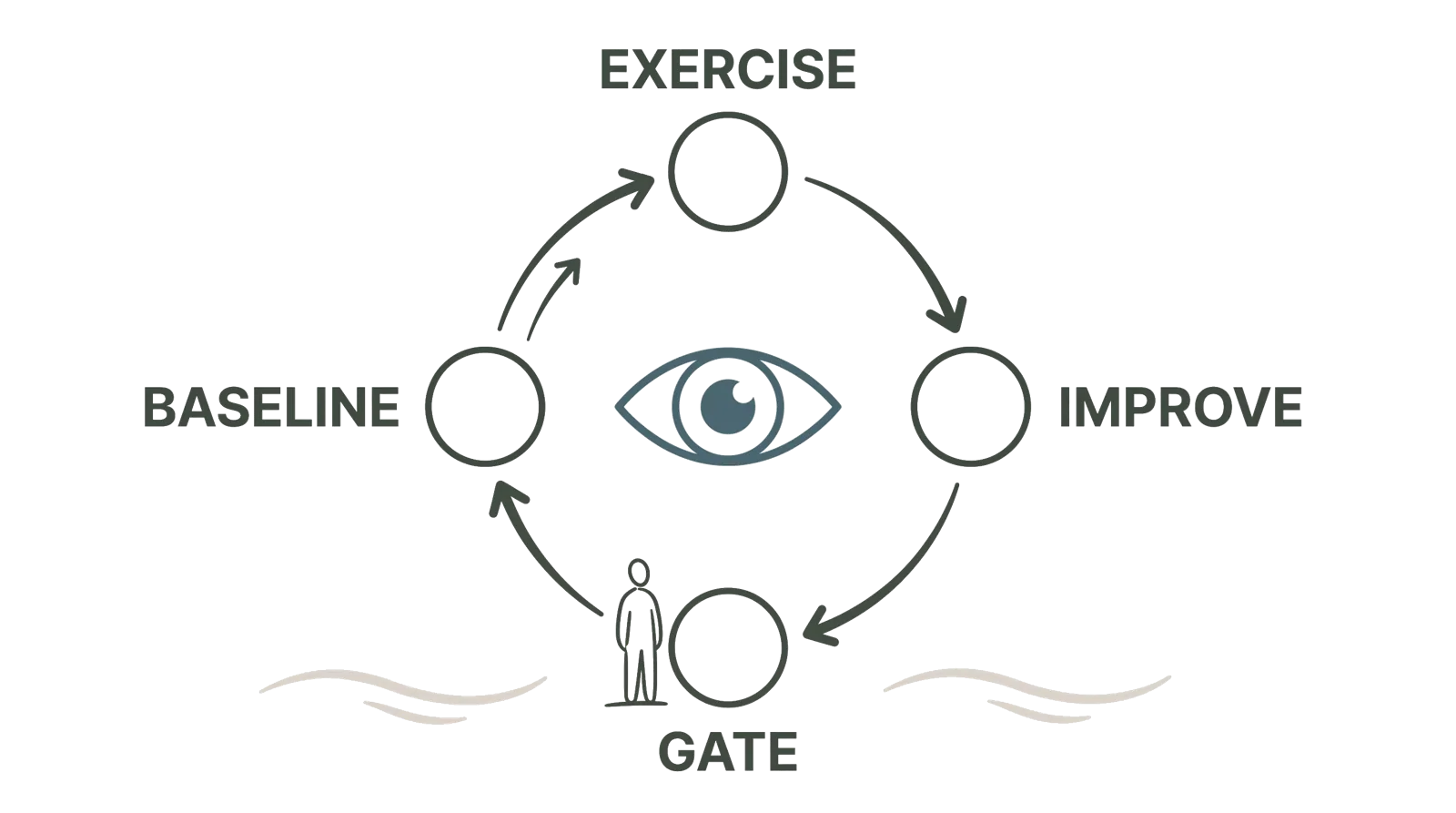
The system improves on evidence it generated about itself, on your schedule, with your criteria, whichever model is inside.
None of this requires a specific product domain. A chat harness, a retrieval pipeline, a coding fleet: the pattern is the same. Build the thing; build the instrument that measures the thing; let the measurements drive the evolution; keep a human at the merge.
What a better model changes, and what it doesn’t
When a stronger model ships, the trust-the-model camp starts over: re-learn its quirks, re-discover its failure modes in production, re-calibrate by anecdote.
The structure camp swaps the component and re-runs the instrument. Within an afternoon there is a measured answer to “what did this model change?”, per behavior, per stage, against the same baseline as before. The stronger model makes every turn of the cycle more productive: better improvement sessions, better fixes, better use of the same senses.
That asymmetry is the whole argument. Structure compounds across model generations. Trust resets at each one.
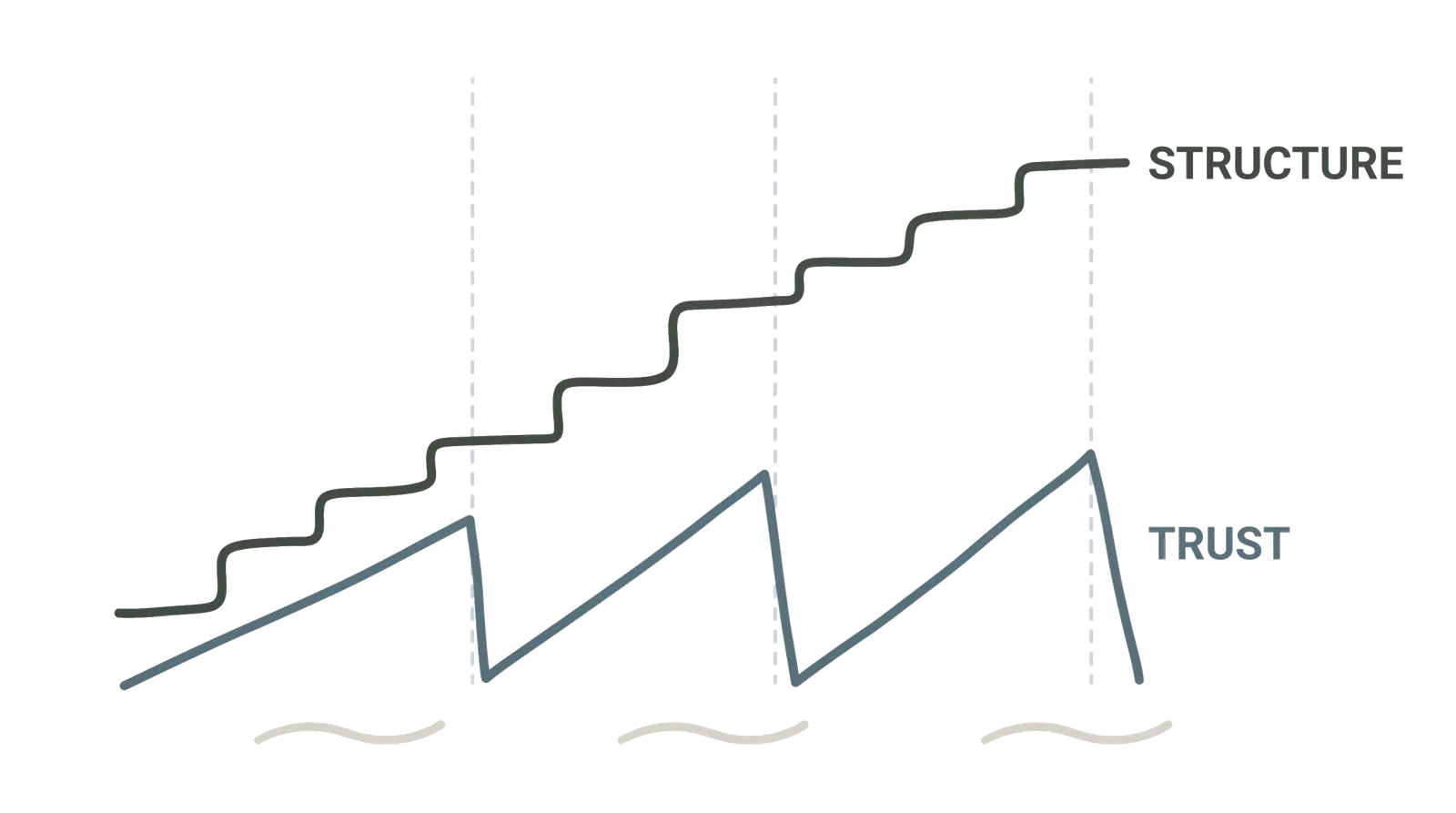
There is a deeper reason the structure does not retire: capability and behavioral discipline are separate axes, and the second does not reliably improve with the first. That decoupling deserves its own essay. For now the short version suffices: the part of the system that catches bad judgment is not waiting for a model that never needs catching.
The system is yours
The industry’s energy is pointed at the component: bigger context, better reasoning, higher benchmark scores. Take all of it; it makes the cycle stronger.
But the thing that determines whether your product improves next month is not in the release notes. It is whether your system has senses, a way to turn what they detect into changes, and a gate where a human still decides what sticks. That is supervision discipline applied to the product itself: the same one level up.
The model is not the system. The model is the strongest part of a system you still have to build.
Key Takeaways
- “The model will handle it” outsources your improvement loop to a vendor’s release calendar
- Structure is not distrust: it is machinery that harvests whatever model sits inside it
- Build the instrument: a tool that exercises the system and emits per-stage evidence about where it stands
- Close the cycle: evidence feeds improvement sessions, a human-gated report controls merges, each change becomes the next baseline
- Structure compounds across model generations; trust resets at each release
- The model is a component. The system is yours
Authored by Davi Guides
Visit daviguides.github.io for more insights